Generative AI for developers: a practical guide

Originally published on Bemorex Learn, our learning platform. · Leer en español
What is generative AI?
Generative AI refers to artificial intelligence models capable of creating new content: text, images, code, audio, and more. Large Language Models (LLMs) like Claude are the most well-known example.
Available APIs
The main APIs for integrating generative AI include the Anthropic API (Claude), OpenAI, Google Gemini, and open-source models like Llama and Mistral that you can host yourself.
Effective prompting
The quality of responses depends enormously on how you write your prompts. Techniques like few-shot prompting, chain of thought, and system prompts can dramatically improve results.
System prompts
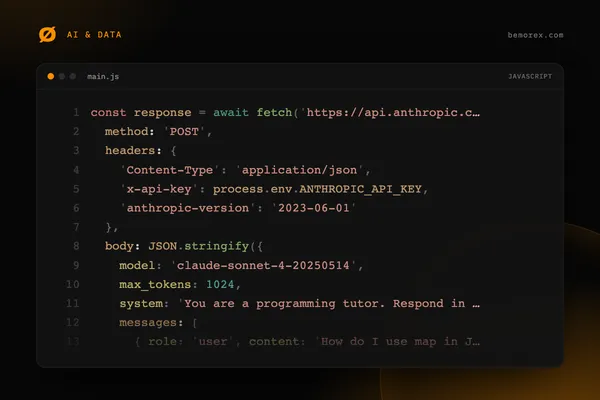
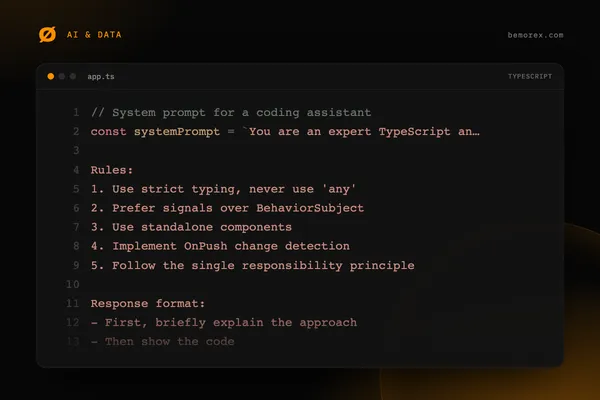
System prompts define the model's behavior and personality. They are ideal for establishing the context, response format, and constraints of your application.
RAG: Retrieval-Augmented Generation
RAG combines information retrieval with text generation. It allows the model to access up-to-date data specific to your domain, significantly reducing hallucinations.
Best practices
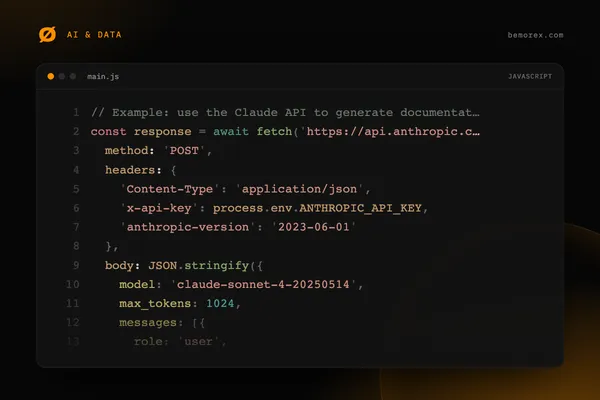
Always validate model responses, implement rate limiting, handle errors gracefully, and never expose your API key on the frontend. Consider using streaming to improve the user experience.
Code examples
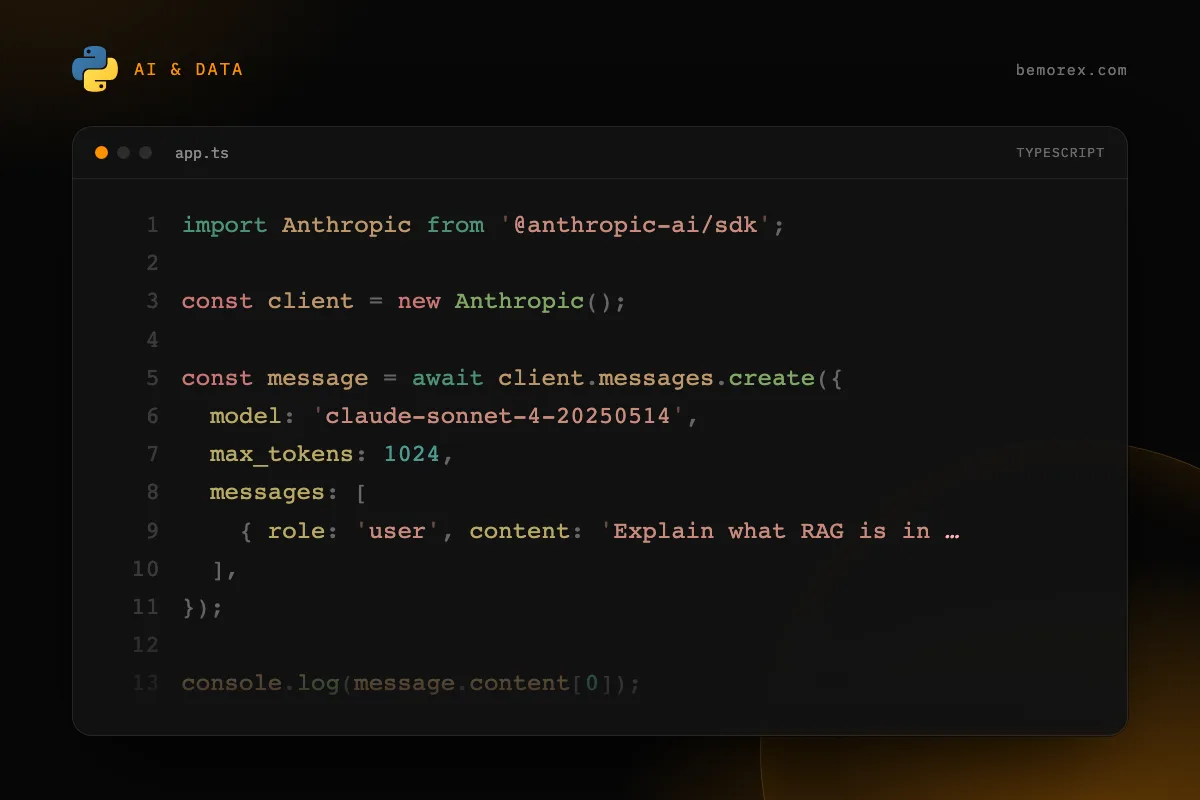
TypeScript
import Anthropic from '@anthropic-ai/sdk';

const client = new Anthropic();

const message = await client.messages.create({
  model: 'claude-sonnet-4-20250514',
  max_tokens: 1024,
  messages: [
    { role: 'user', content: 'Explain what RAG is in 3 sentences' }
  ],
});

console.log(message.content[0]);
Python
import anthropic

client = anthropic.Anthropic()

message = client.messages.create(
    model="claude-sonnet-4-20250514",
    max_tokens=1024,
    messages=[
        {"role": "user", "content": "Explain what RAG is in 3 sentences"}
    ],
)

print(message.content[0].text)